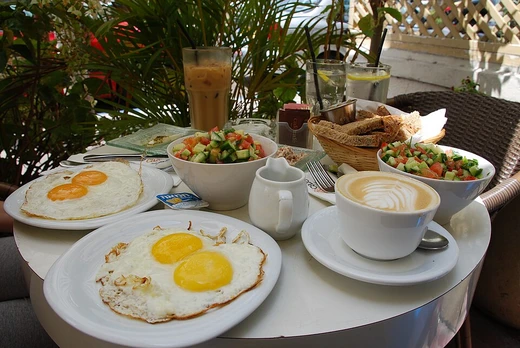
Haminados
Sephardic braised eggs, browned by long, slow cooking.
Haminados are eggs slowly cooked until their whites turn a red-brown color and their yolks darken. The name comes from the Hebrew word "ḥam" (חם), meaning "hot," which points to how the dish is made. It is also called huevos haminados, chaminados, or braised eggs.
This dish has been part of Jewish cooking since at least the 1400s in Medieval Spain. Today, it is a key part of Israeli cuisine. Haminados are often made on their own or as part of chamin, a Sephardic and Mizrahi Shabbat stew (the counterpart of Ashkenazi cholent). These braised eggs are commonly used as an ingredient or served alongside other dishes.
The name haminados comes from the Ladino phrase "guevos haminados," meaning "warmed eggs." In the past, it was also called "huebos hammados." The word combines the Spanish "huevos" (eggs) with the Hebrew "ham" (hot) and the Spanish ending "-ados" (perfect-passive, masculine plural), so it means "made hot, heated."
The dish's origins lie in the Jewish cooking traditions of Medieval Spain. Eggs were a daily staple then and carried symbolic meaning in Jewish culture, representing creation, mourning, and celebration. According to Hélène Jawhara Piñer, during the Spanish Inquisition, foods like haminados were used as proof that New Christians (converted Jews) were secretly practicing Judaism. For example, in 1490, Pedro Martínez from Soria was reported for eating red eggs during Lent, which overlapped with the Jewish holiday of Passover. Later, in 1505, Alvaro de Luna was put on trial in Almazán after witnesses said he ate red eggs on Fridays and during Lent.
Typically, whole eggs in their shells are placed on top of hamin (a Shabbat stew) in the cooking pot. They braise for many hours, often overnight, and turn brown during the long cooking. Before serving, the brown shells are removed, and the eggs are placed on top of the other cooked ingredients. In the Tunisian version, the brown eggs are cooked separately in a metal pot on an overnight stove with water and tea leaves (similar to tea eggs). Some versions use only salt and water, but the eggs still brown, likely due to Maillard reactions. Haminados can be cooked this way even without making hamin. Adding tea leaves, coffee grounds, or onion skins to the water dyes the shell purple and helps the egg white brown more. In Israel, brown eggs are a popular side dish for ful medames (mashed broad beans)
- field
- Cuisine
- nationality
- Sephardic Jewish / Israeli
- known_for
- Slow-cooked brown eggs, often part of Shabbat stew
- alternative_names
- Huevos haminados, chaminados, braised eggs
- etymology
- From Hebrew 'ḥam' (hot) and Spanish 'huevos' (eggs)
Lore & Background
The origins of haminados are rooted in the Jewish culinary traditions of Medieval Spain. During this period, eggs were a staple in daily diets and held significant symbolic meaning within Jewish culture, representing various aspects of life such as creation, mourning, and celebration. Hélène Jawhara Piñer notes that during the Spanish Inquisition, traditional Jewish foods such as haminados were used as evidence against New Christians (converted Jews) for secretly adhering to Judaism. For instance, in 1490, Pedro Martínez from Soria was denounced for consuming red eggs during Lent, a period that coincided with the Jewish holiday of Passover. Later, in 1505, Alvaro de Luna was tried in Almazán after witnesses reported that he ate red eggs on Fridays and during Lent.
Reader's Guide
Haminados typically consists of whole eggs in the shell, which are placed on top of a hamin (a Shabbat stew) in the stewing pot. The eggs are braised over many hours, often overnight and turn brown in the course of all-night cooking. The brown eggs are shelled before serving and placed on top of the other cooked ingredients. In the Tunisian version, the brown eggs are cooked separately in a metal pot on the all-night stove with water and tea leaves (similar to tea eggs). Some versions use only salt and water, but the eggs still brown, likely due to Maillard reactions. Haminados can be cooked in this way even if no hamin is prepared. The addition of tea leaves, coffee grinds, or onion skins to the water dyes the shell purple and enhances browning of the egg white. In Israel, brown eggs are a popular accompaniment to ful medames (a dish of mashed broad beans) and they may also be served with hummus (a dip of mashed chickpeas mixed with tahini) and in a sabich sandwich.
Did You Know?
- The name haminados derives from the Hebrew word 'ḥam' (hot) and the Spanish word 'huevos' (eggs).
- During the Spanish Inquisition, eating red eggs during Lent was used as evidence of secretly practicing Judaism.
- In the Tunisian version, haminados are cooked with water and tea leaves, similar to tea eggs.
- Haminados are a key component of the Sephardic and Mizrahi Shabbat stew called chamin.
Frequently Asked Questions
What are Haminados?
Haminados are eggs that have been slow-cooked for an extended period, giving the whites a distinctive red-brown tint and the yolks a noticeably darker color. They are a hallmark of Sephardic and Mizrahi Jewish cooking and a well-recognized element of Israeli cuisine.
Where does the name 'Haminados' come from?
The term traces back to the Hebrew word 'ḥam' (חם), meaning 'hot,' which references the long, low-heat method used to prepare the eggs. In Spanish-speaking settings they are also called huevos haminados or chaminados, blending the Spanish word for eggs with the Hebrew root.
How old is the Haminados tradition?
The practice of slow-braising eggs in this manner has been documented in Sephardic Jewish kitchens in Medieval Spain since at least the 1400s. It has since become a defining feature of Israeli and Sephardic food culture.
How are Haminados usually served?
They are most often added to chamin, the Sephardic and Mizrahi Shabbat stew that serves as the counterpart to Ashkenazi cholent. They can also be enjoyed on their own as a simple standalone dish.
What makes Haminados different from regular boiled eggs?
The prolonged, gentle cooking process is what produces the signature red-brown coloring on the whites and the deepened, darker hue of the yolks. This slow method, rather than a quick boil, is central to the dish's identity in Jewish cuisine.
More in Israeli cuisine 1-24
Spotted an error? Know more?
This is a living reference — every entry is fact-audited, and reader corrections feed straight into our audit queue. Suggest an edit · See this site's audit record